EN
try amma today
Do I have to eat for two?
Pregnancy

Do I have to eat for two?

2 min readWeek 7
Key takeaways
2 min
  • Focus on nutrient quality over quantity - you don't need to double your calorie intake during pregnancy.
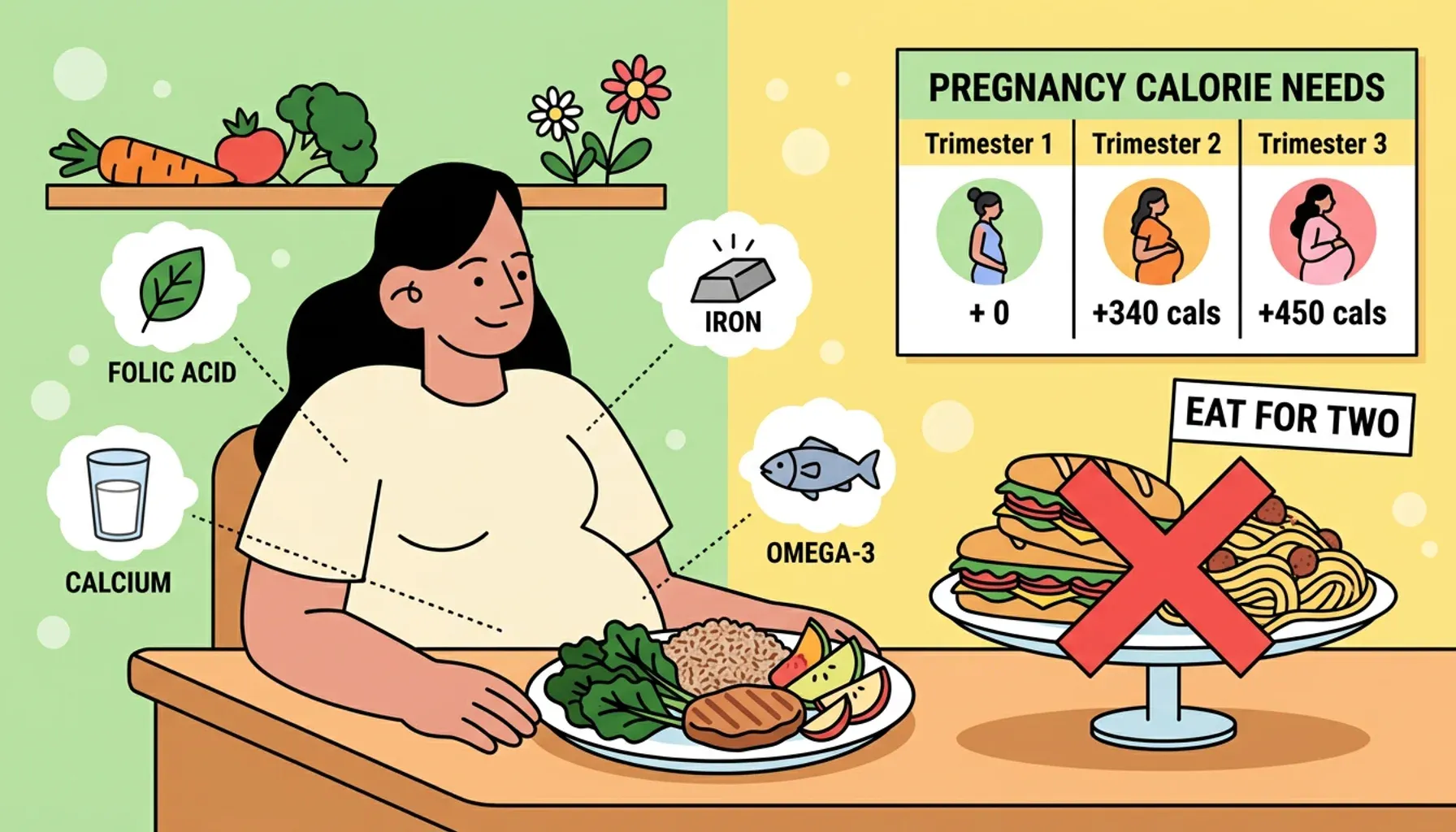
  • Prioritize folate and iron in the first trimester, as requirements for these nutrients actually double.
  • Increase phosphorus and iodine intake by 15-20% through fish like cod, salmon, or shrimp (3.5-7 oz daily).
  • Add only 200-400 extra calories per day in later pregnancy stages, emphasizing proteins and complex carbohydrates.
  • Follow healthy eating principles: choose seasonal produce, avoid trans fats, and limit sugar to 5-10% of total calories.

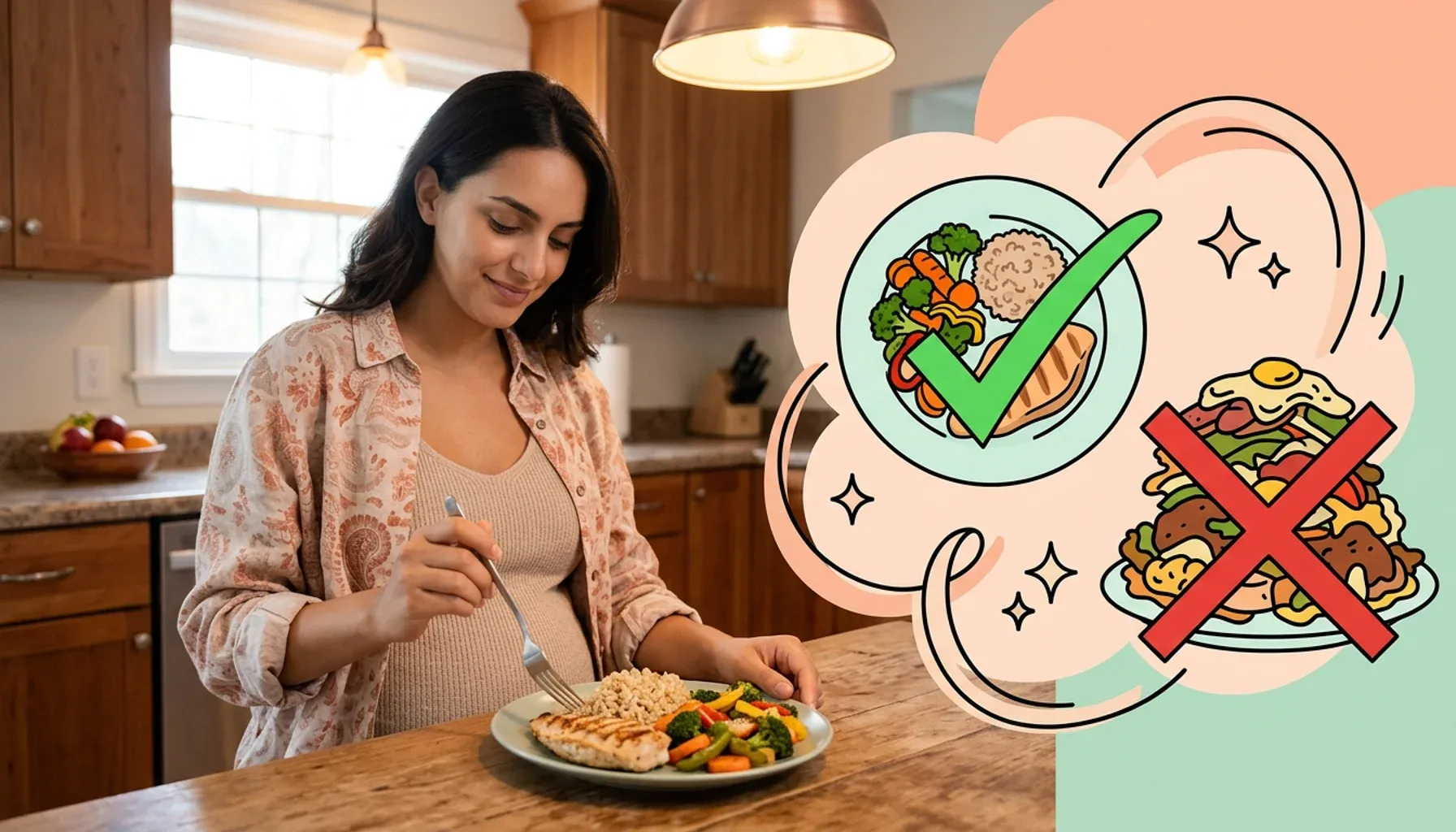
No, you don't need to eat twice as much during pregnancy. 'Eating for two' means focusing on nutrient quality, not quantity. You only need an extra 200-400 calories daily in later trimesters, emphasizing proteins and complex carbohydrates over fats and sugars.

amma app

Track your pregnancy in the app

Personalized content for your pregnancy week

Download App

Do I have to eat for two?

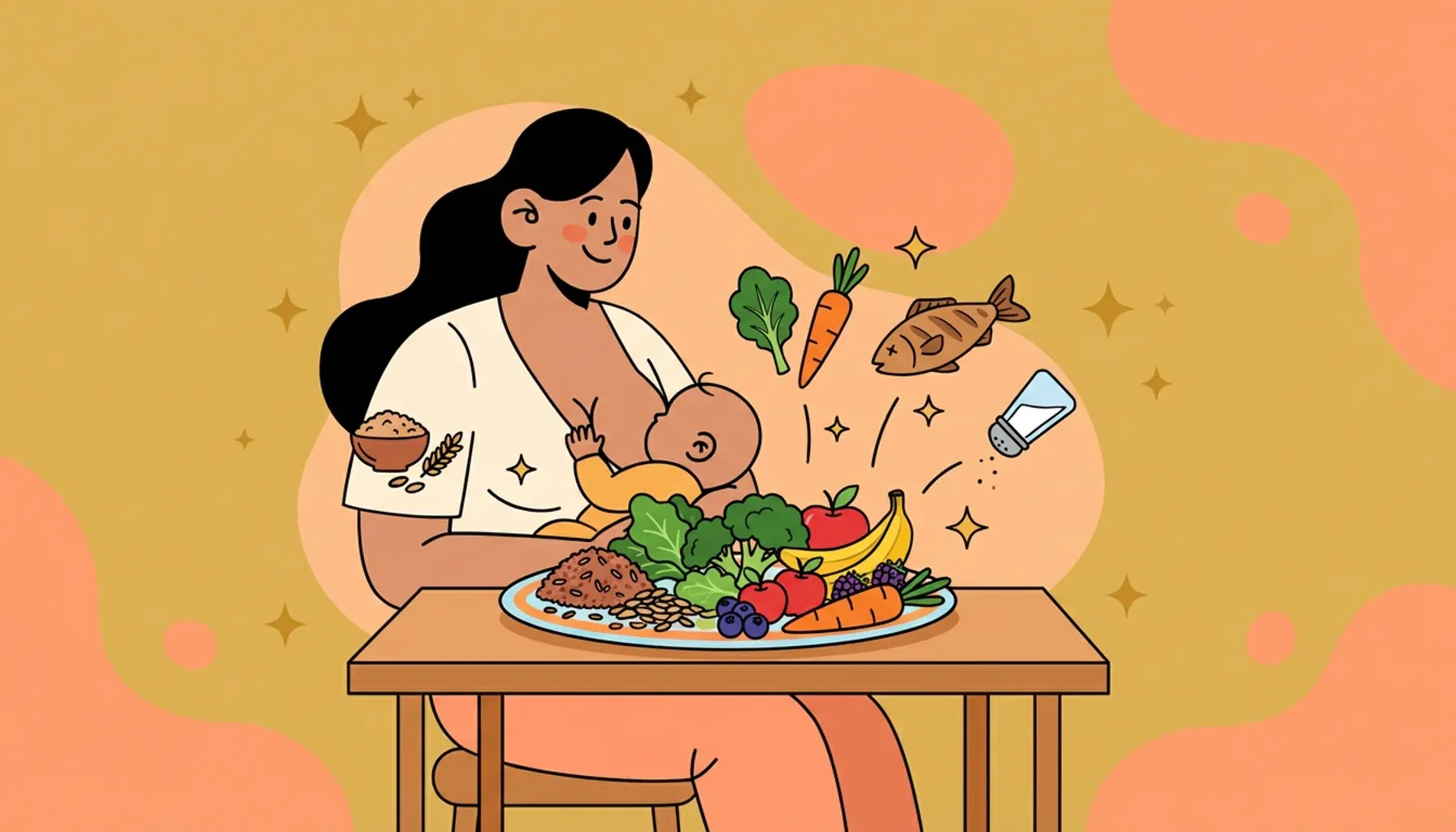
Although many people may joke that you are now eating for two, it doesn’t mean you should be consuming twice as many calories. Mamas in the first trimester need to make sure they are getting the variety of vitamins and minerals necessary to support pregnancy and the development of the baby.

Throughout the pregnancy the necessary vitamins and minerals change. For example, in the first trimester, folates and iron are especially important for mother and child. The requirements actually double! Phosphorus and iodine should be increased by 15-20 percent [1]; both of these trace elements are present in fish [2]. 3.5 ounces (100 g) of cod or salmon or 7 ounces (200 g) of shrimp will be enough for you per day.

A menu might look something like this:

  • Breakfast: whole grain cereal with milk (iodine and calcium).

  • Lunch: fish soup made with cod or salmon (phosphorus and iodine).

  • Dinner: stir-fried beef with spinach (iron and folate).

In between the main meals, snack on nuts and apples, adhering to the general rules of healthy eating [3]:

  • Give preference to seasonal fruits and vegetables.

  • Avoid trans fats (margarines and spreads). Limit consumption of packaged products containing trans fats (donuts, muffins, pies, cookies and waffles).

  • Give preference to vegetable fats over animal.

  • Trim visible fat from meat.

  • Reduce the use of sugar and sweets to 10% (and ideally down to 5%) of the total calorie intake.

At later stages of pregnancy, of course, you will need to increase the amount you eat by about 200-400 calories per day more [4]. Try to get energy not from fats and sugars, but from proteins and slow carbohydrates. Over time, it makes sense to increase the intake of zinc and magnesium, vitamins A and D - you will certainly find information about this in our application for the corresponding week.
Frequently asked questions

No, 'eating for two' doesn't mean doubling your food intake. You only need an extra 200-400 calories per day in later pregnancy stages. Focus on nutrient-dense foods rather than eating larger portions.

Folate and iron are especially crucial in the first trimester, with requirements actually doubling. Phosphorus and iodine should also be increased by 15-20%, which you can get from fish like cod or salmon.

In the first trimester, you don't need extra calories. During later stages, add about 200-400 calories per day from proteins and complex carbohydrates rather than fats and sugars.

Limit trans fats found in margarines, donuts, and packaged baked goods. Reduce sugar intake to 5-10% of total calories and choose vegetable fats over animal fats when possible.

Include whole grain cereals with milk for breakfast, fish-based meals for lunch, and iron-rich foods like beef with spinach for dinner. Snack on nuts and seasonal fruits between meals.

Medical Disclaimer

This article is for informational purposes only and is not a substitute for professional medical advice, diagnosis, or treatment. Always seek the advice of your physician or qualified health provider with any questions you may have regarding a medical condition.

Meet our medical experts

Medically reviewed content

Reviewed by healthcare professionals · Updated June 5, 2025

Track your pregnancy on the go

Rated 4.8417,594 reviews