EN
try amma today
Causes of multiple pregnancies
Pregnancy

Causes of multiple pregnancies

2 min readWeek 4
Key takeaways
2 min
  • Understand that twin pregnancies have increased 75% since 1980, primarily due to modern fertility treatments and delayed childbearing.
  • Know your natural odds: 1 in 250 chance for twins and 1 in 10,000 for triplets, but these increase after age 35.
  • Consider genetic factors - if you're a twin mother, your chances increase from 1:250 to 1:60 for having twins yourself.
  • Recognize that fertility treatments like ovulation stimulation and embryo transfer significantly raise multiple pregnancy likelihood.
  • Plan accordingly as women aged 35-40 have higher chances of releasing multiple eggs in one cycle naturally.

Multiple pregnancies are caused primarily by fertility treatments, advanced maternal age, and genetics. Since 1980, twin births increased 75% due to ovulation-stimulating medications and delayed childbearing, as women over 35 naturally release multiple eggs more frequently.

amma app

Track your pregnancy in the app

Personalized content for your pregnancy week

Download App

In the past, the birth of twins or triplets wasn’t that common, so no clinical guidelines for managing multiple pregnancies existed. But now, a true need has arisen, so specific protocols for multiples are followed in most places.

Are there more twins now in the world?

Yes. Since 1980, the number of twin pregnancies has increased by 75%, and triplets have gone up even more [1].

Why are twins and triplets more common than before?

Higher numbers of twin and triplet pregnancies are mainly due to modern fertility treatment methods. For example, if a woman takes medication to stimulate ovulation, there is a higher chance of more than one egg maturing and fertilizing in a single cycle. 

Currently, the consensus among experts is to transfer only one embryo at a time. However, in patients who have experienced multiple failed transfers, doctors may implant two embryos into the uterus at a time in an attempt to increase the chances of pregnancy. If both embryos were to implant successfully, the result would be a twin pregnancy [2].

What is the probability of conceiving twins naturally?

With natural conception, the probability of having twins is about 1 in 250 pregnancies and the chance of having triplets is 1 in 10,000. However, between the ages of 35 and 40, the probability of multiple pregnancies increases because women at this age (called the "late fertile stage") can have two or three oocytes mature simultaneously in a given cycle [1]. Nowadays, many women postpone having children, and this too increases the number of twins being born globally.

If one of the future parents is a twin, does the chance of having a multiple pregnancy increase?

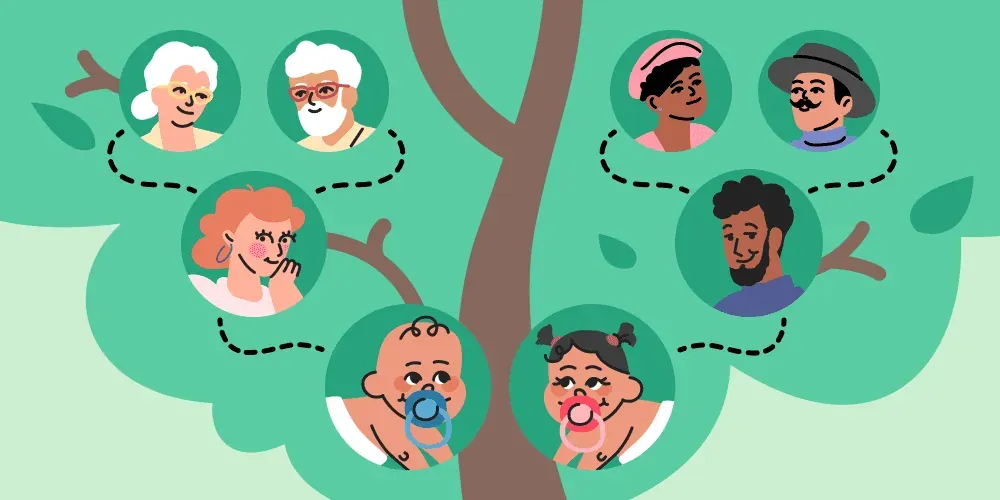
There is a genetic pattern when it comes to twins. However, the tendency for multiple pregnancies is mostly passed on through the mother. So if the expectant mother is a twin herself, the probability of her having twins increases from 1:250 to 1:60 [1].

Frequently asked questions

Twin pregnancies have increased 75% since 1980 mainly due to fertility treatments and women having babies later in life. Fertility medications can cause multiple eggs to mature, while women over 35 naturally release multiple eggs more often.

The natural probability of conceiving twins is about 1 in 250 pregnancies. For triplets, the odds are much lower at 1 in 10,000 pregnancies.

Yes, genetics play a role, especially through the mother's side. If you're a twin mother, your chances increase significantly from 1:250 to 1:60 for having twins yourself.

Women between ages 35-40 are more likely to release multiple eggs during ovulation due to hormonal changes. This natural increase in egg release raises the chances of multiple pregnancies during this late fertile stage.

Fertility medications stimulate ovulation, causing multiple eggs to mature and potentially fertilize. IVF procedures may also transfer multiple embryos, though current guidelines recommend single embryo transfer to reduce multiple pregnancy risks.

Medical Disclaimer

This article is for informational purposes only and is not a substitute for professional medical advice, diagnosis, or treatment. Always seek the advice of your physician or qualified health provider with any questions you may have regarding a medical condition.

Meet our medical experts

Medically reviewed content

Reviewed by healthcare professionals · Updated September 5, 2024

Track your pregnancy on the go

Rated 4.8417,594 reviews