EN
try amma today
Breast milk and diet
Pregnancy

Breast milk and diet

2 min readWeek 7
Key takeaways
2 min
  • Prioritize iron, zinc, calcium, folic acid, and copper intake to prevent maternal depletion and support your own health during breastfeeding.
  • Include foods rich in B vitamins, vitamin D, omega-3 fatty acids, and iodine since these nutrients pass directly to baby through breast milk.
  • Replace refined grains with legumes and increase protein and leafy greens to optimize nutrient density in your breastfeeding diet.
  • Monitor for signs of deficiency like excessive fatigue or mood changes, as your body will prioritize baby's needs over your own nutrient stores.
  • Consider that vegan mothers may need extra attention to iron intake to prevent anemia and reduce postpartum depression risk.

Breast milk quality depends on maternal diet for certain nutrients including B vitamins, vitamin D, omega-3 fatty acids, and iodine. Your body prioritizes essential nutrients like calcium and iron for baby, potentially depleting your own stores if intake is inadequate.

amma app

Track your pregnancy in the app

Personalized content for your pregnancy week

Download App

Breast milk and diet

The quality and quantity of breast milk depends on many factors including whether or not the baby was full term, time since birth, frequency of feedings and also partially on mama’s diet.

What mom needs

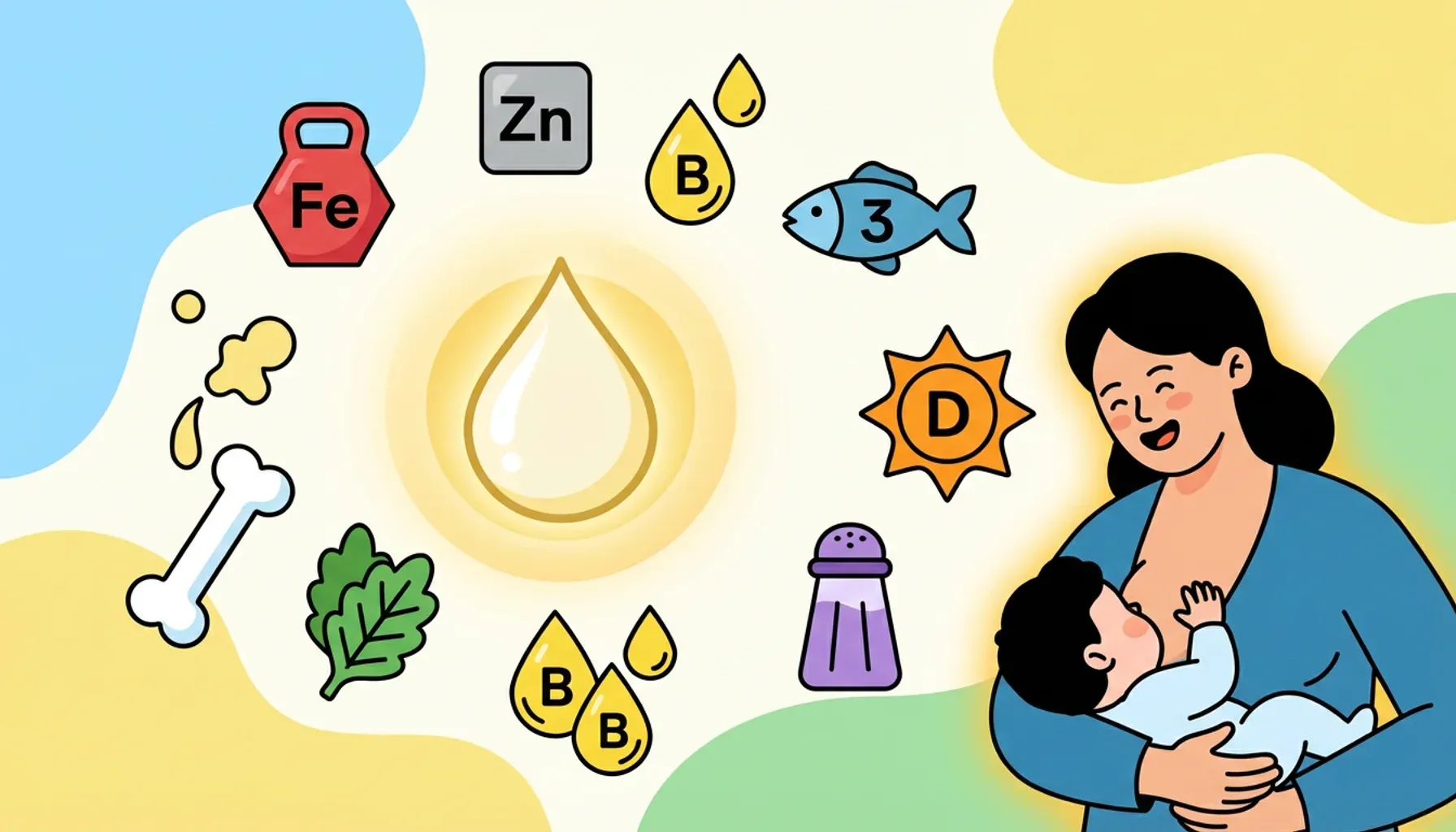
There are important micronutrients that are useful for mama [2]. These micronutrients will be passed on through breast milk whether or not mama is eating a diet rich in these. They are:

  • folic acid
  • calcium
  • iron
  • copper
  • zinc

Baby will always get the right amount of these nutrients. Nature will take care of this, even if it means drawing from the last reserves of mama’s body. For example, excessive fatigue and even postpartum depression can result from iron deficiency and zinc deficiency. Statistically, vegan moms are more prone to postpartum depression because they are more likely to be anemic if not eating carefully [3]. To take good care of yourself, be sure to eat food rich in these micronutrients.

What baby needs

The following nutrients enter breast milk from food. And if the mother lacks them, then the baby will receive less of it [2]:

  • thiamine
  • riboflavin
  • vitamin B6
  • vitamin B12
  • choline
  • retinol
  • vitamin D
  • selenium
  • iodine
  • omega-3 fatty acids [4]

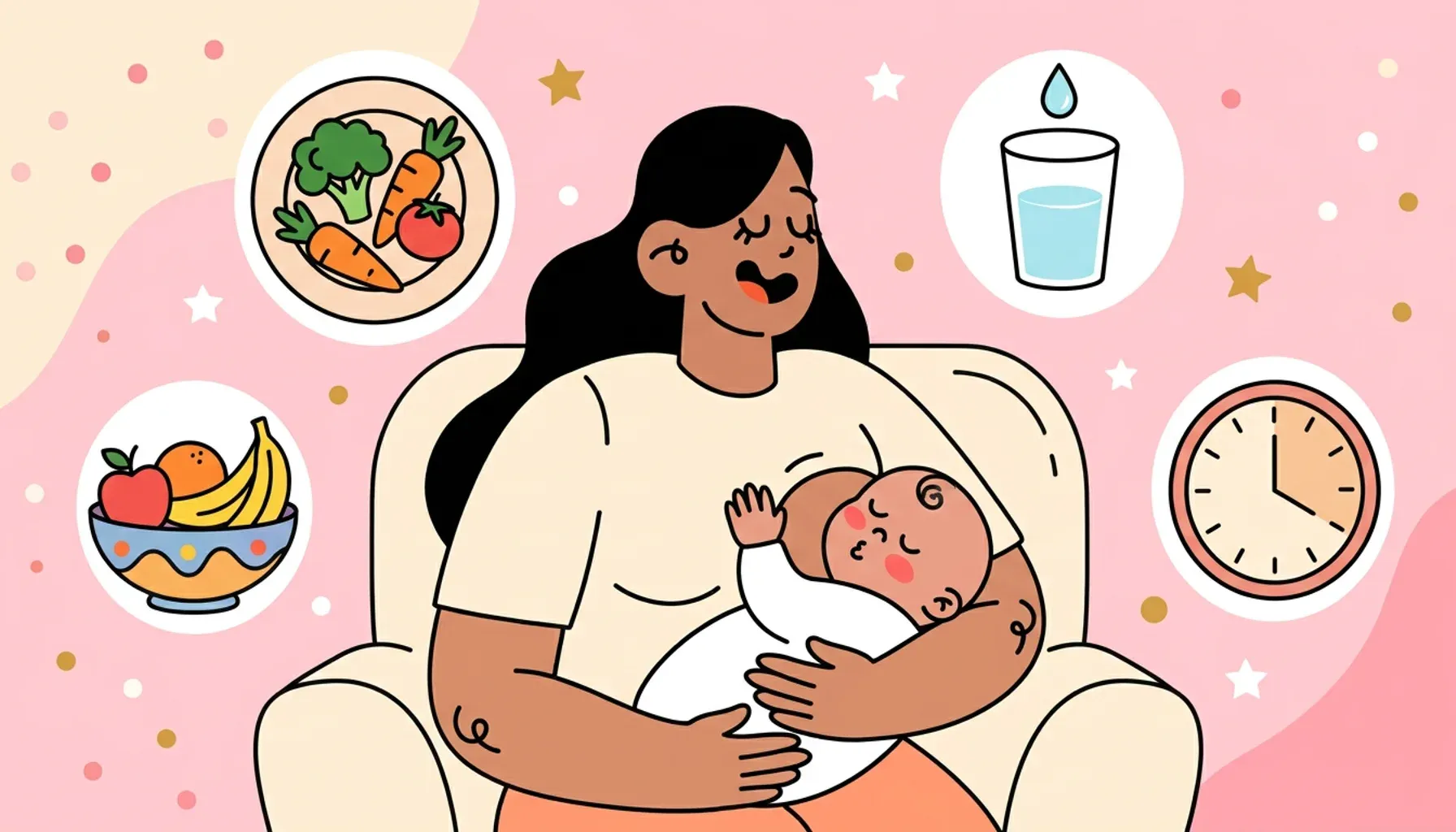
In short, it would be useful to eat more greens and protein, and replace grains with legumes if possible.

  1. A systematic review and meta-analysis of the nutrient content of preterm and term breast milk. Dominica A. Gidrewicz, Tanis R. Fenton. BMC Pediatr., 2014.

  2. B vitamins in breast milk: relative importance of maternal status and intake, and effects on infant status and function. Allen L. H. Advances in Nutrition, 2012.

  3. Nutrition health issues in self-reported postpartum depression. Hogg-Kollars Sabine, et al. Gastroenterology and Hepatology from Bed to Bench, 2011.

  4. Nutritional Gaps and Supplementation in the First 1000 Days. Beluska-Turkan Katrina, et al. Nutrients, vol. 11, 12, Nov 2019.

Frequently asked questions

Focus on iron, zinc, calcium, folic acid, and copper to prevent maternal depletion. Also prioritize B vitamins, vitamin D, omega-3 fatty acids, and iodine since these directly affect your breast milk quality.

Yes, your diet affects certain nutrients in breast milk including B vitamins, vitamin D, selenium, iodine, and omega-3 fatty acids. However, your body will maintain essential nutrients like calcium and iron in breast milk even at the expense of your own stores.

Iron and zinc deficiencies can contribute to excessive fatigue and postpartum depression. Vegan mothers are statistically more prone to postpartum depression due to higher anemia risk if not eating carefully.

Eat more leafy greens and protein-rich foods. Replace refined grains with legumes when possible to maximize nutrient density and support both your recovery and breast milk quality.

Medical Disclaimer

This article is for informational purposes only and is not a substitute for professional medical advice, diagnosis, or treatment. Always seek the advice of your physician or qualified health provider with any questions you may have regarding a medical condition.

Meet our medical experts

Medically reviewed content

Reviewed by healthcare professionals · Updated September 3, 2024

Track your pregnancy on the go

Rated 4.8417,594 reviews