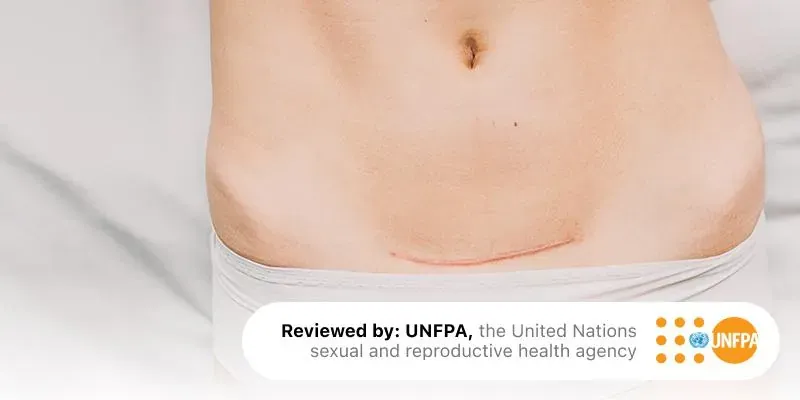

In some communities and cultures, a cesarean (more commonly referred to as a C-section) is viewed as less merit-worthy than giving birth “naturally,” through the vagina. Some mothers are even made to feel guilty for having a C-section. However, the way a person decides to deliver their baby is entirely their choice. What matters most is keeping both the mother and the baby safe by minimizing the risks of childbirth.
Some women may not have the option of vaginal birth because of health concerns or a high-risk pregnancy. Some common reasons why mothers choose or are encouraged to choose a C-sections are having multiple pregnancies, experiencing placenta previa, or having chronic diseases such as diabetes or herpes. A C-section is also a safer delivery method for very large babies or breech babies [1, 2]. While many C-sections are planned, others are performed in emergency scenarios, such as when the cervix is not dilating.
I can’t shake the feeling that it’s not really giving birth
This is understandable. Most of us have a strong image of what childbirth should look like derived from movies, TV shows, and other people’s accounts. When our story is different, we may feel that something is wrong. Please know that there is no truth to this.
Do not fear the judgment of others, and watch out for judgment from yourself. The truth is, there is no such thing as “natural” or “unnatural” childbirth. Vaginal and C-section deliveries are equally valid, and your baby or your relationship with them isn’t altered by the method through which you bring them into the world.
Won’t people think I’m too selfish, lazy, or scared to deliver vaginally?
First of all, keep in mind that no one is judging you, so don’t judge yourself. Second, C-sections are prescribed by doctors for legitimate reasons. It’s an invasive surgery that involves a long recovery. No one should believe that you’re taking the “easy way out.”
Doesn’t C-section lead to severe physical and psychological damage?
A C-section can be traumatic, especially if it’s an emergency [3]. It carries a higher risk of postpartum depression [4], can cause self-esteem struggles for moms, and can reduce feelings of satisfaction from motherhood [5]. Some mothers have nightmares and carry painful memories for a long time [6] after having a C-section.
But this is not the norm. Most mamas do very well with their C-sections and recovery. It’s advised, however, that you only have a C-section when it is medically recommended.
Deciding when you can get pregnant and how you will deliver your next baby after a previous C-section can be a complex decision. Talk to your healthcare provider, who can help you weigh the risks of repeated C-sections against your desire for future pregnancies [7].
How will a C-section affect my baby?
Research shows that a C-section birth affects the bacterial environment in the baby's gut. They are more likely to be vulnerable to pathogenic microorganisms in the hospital. In addition, because they don’t pass through the birth canal, they don't benefit from the vaginal microflora, which strengthens the immune system [8]. However, experts tell us that after nine months, all differences in gut bacteria disappear [9]. Babies will get exposure to beneficial bacteria through contact with people, and objects, and also through breastfeeding, which is not affected by a C-section.
Whether you have a vaginal delivery or C-Section you are still giving birth to a baby, the most important thing to think about is delivering a healthy one.
This article was created in association with UNFPA, the United Nations sexual and reproductive health agency.