
The rate of urination is the same for breastfed and formula-fed babies. But if you are breastfeeding, then counting diapers is, in fact, the only way to know if your baby is eating enough.
How often should a baby pee?
It depends on how often the baby is breastfeeding. On average, newborns pee every one to three hours [1]. If less often (and the baby is completely breastfed), this is a reason to be on the alert. Perhaps due to improper attachment or difficulty sucking, the baby is not able to get the required amount of milk from the mother's breasts. This can lead to life-threatening dehydration [2].
Does this mean that a child's diaper needs to be checked every hour when breastfeeding?
Not necessarily. On average, it can be assumed that an infant pees 0.1 to 0.2 fl oz (3 to 5 ml) of urine per two pounds of its own weight per hour [3]. Thus, a child weighing 7 lbs 8 oz should pee about 0.3-0.5 fl oz (10-15 ml) per hour, and 1-1.5 fl oz (30-45 ml) in three hours, respectively.
How do I measure this 1-1.5 fl oz?
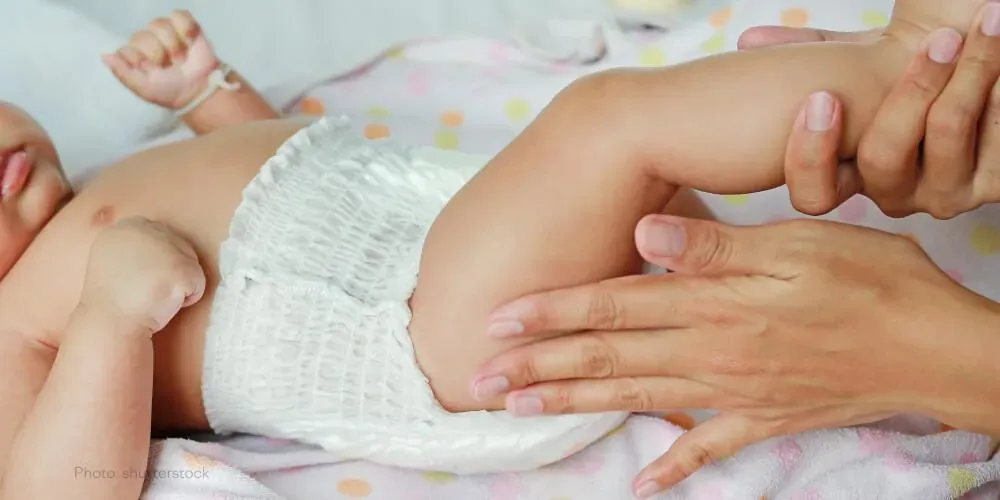
To make a test nappy, fill it with three tablespoons of water and weigh it with your palm. Throughout the day, your baby should "hand over" five or six of these filled diapers. An overnight nappy may weigh twice as much.
What if my newborn pees more or less than the norm?
If it is less, then perhaps they are dehydrated. In this case, you may need a consultation with a lactation consultant. Additionally, you should visit your pediatrician because insufficient urination could indicate an endocrine issue [3].
Is it okay for a baby to cry while peeing?
No. Urination should be completely painless. If a baby shows any sign of anxiety (crying, straining) it may be a symptom of infection or other disease. Talk to your pediatrician [1].
Photo: shutterstock