EN
try amma today
Fitness after childbirth: what you need to know
New Parent

Fitness after childbirth: what you need to know

2 min read
Key takeaways
2 min
  • Consult your gynecologist before resuming exercise, especially if you had complications like diastasis recti, incontinence, or cesarean delivery.
  • Start with 10-minute aerobic exercises daily immediately after hospital discharge, building up to 150 minutes per week as recommended by WHO.
  • Return to pre-pregnancy fitness routine 2-3 months postpartum if you were previously active, or start gradually with just 10 minutes daily if new to exercise.
  • Manage exercise-related urinary incontinence by urinating before workouts, wearing supportive gear, and strengthening pelvic floor muscles.
  • Combine breastfeeding and fitness by nursing before exercise, using supportive sports bras, and staying well-hydrated throughout your workout routine.

New mothers can start light aerobic exercise immediately after hospital discharge, beginning with 10-minute daily sessions. Those previously active can return to full intensity workouts 2-3 months postpartum, while beginners should start gradually. Always consult your doctor first, especially if experiencing complications like incontinence or diastasis recti.

amma app

Track your pregnancy in the app

Personalized content for your pregnancy week

Download App

If you were athletic before and during pregnancy and had a smooth delivery, you can return to your usual workouts now. But you should talk to your gynecologist about any details and restrictions during your scheduled visit [1].

What restrictions might there be after childbirth?

If you have urinary incontinence, pelvic organ prolapse, diastasis (separation of the rectus abdominal muscles), or poorly healing stitches from a cesarean or episiotomy, you should wait before using free weights or engaging in activities that require heavy lifting [1].

Discuss your exercise routine with your doctor at your first postpartum appointment.

 How to start exercising after giving birth?

The American College of Obstetricians and Gynecologists advises starting aerobic exercises immediately after discharge from the hospital. The WHO recommends 150 minutes of physical activity per week, or about half an hour per day. You can break this into three short 10-minute workouts each day [2].

If you were actively exercising before and during pregnancy, you can return to your previous activities two to three months after giving birth [1]. If you didn't exercise before, start gradually: even 10 minutes of exercise a day can benefit your body [2].

Is it possible to do fitness with urinary incontinence?

Yes, it is possible. Statistics show that one out of two women experiences urinary incontinence during exercise, even if they haven’t given birth. The most risky activities are those with high-impact loads, such as running, jumping, volleyball, and CrossFit [3].

Everyone must weigh the pros and cons of exercising with incontinence for themselves. These tips may help:

  • urinate immediately before training

  • use pads

  • wear dark sweatpants

  • avoid exercises that cause the most pronounced leakage

  • reduce the intensity 

  • exercise the pelvic floor muscles [3].

How to combine fitness and breastfeeding?

  • Breastfeed or express yourself immediately before training.

  • Feed the baby again an hour after training.

  • Use a well-supporting sports bra.

  • If necessary, use nursing pads into the bra.

  • Don’t forget to drink water [1, 2].

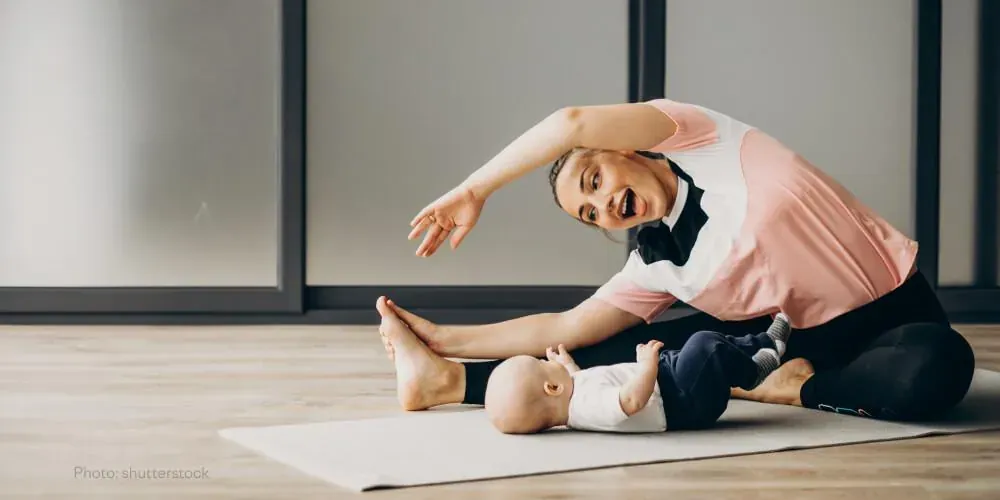
Photo: shutterstock


Frequently asked questions

You can start light aerobic exercises immediately after hospital discharge if you had a smooth delivery. However, always consult your doctor at your first postpartum appointment before beginning any exercise routine.

If you were active before pregnancy, you can typically return to your previous workout intensity 2-3 months after giving birth. Those with complications like diastasis recti or cesarean sections may need to wait longer.

Yes, you can safely exercise while breastfeeding. Breastfeed or pump before workouts, wear a supportive sports bra, and stay hydrated throughout your routine.

Use pads, urinate before exercising, wear dark clothing, and focus on pelvic floor strengthening exercises. Avoid high-impact activities like jumping or running if they cause significant leakage.

The WHO recommends 150 minutes of physical activity per week, which equals about 30 minutes daily. You can break this into shorter 10-minute sessions throughout the day.

Medical Disclaimer

This article is for informational purposes only and is not a substitute for professional medical advice, diagnosis, or treatment. Always seek the advice of your physician or qualified health provider with any questions you may have regarding a medical condition.

Meet our medical experts

Medically reviewed content

Reviewed by healthcare professionals · Updated September 6, 2024

Track your pregnancy on the go

Rated 4.8417,594 reviews