EN
try amma today
Does my child need to be around other adults?
New Parent

Does my child need to be around other adults?

2 min read
Key takeaways
2 min
  • Introduce your baby to trusted adults like grandparents or close family friends during the first three months when they're most receptive to social interaction.
  • Limit your baby's social circle to no more than ten trusted adults to avoid overwhelming them while still providing beneficial socialization.
  • Encourage multiple adult bonds as they strengthen your baby's social development and don't weaken the parent-child connection.
  • Look for positive signs like perking up, smiling, and happy babbling when your baby interacts with other caring adults.
  • Prioritize consistent caregivers who can provide the same comforting interactions as parents through patting, smiling, and gentle communication.

Yes, babies benefit from bonding with trusted adults beyond their parents. During the first three months, babies are especially receptive to social interaction and can develop healthy bonds with up to ten trusted caregivers without weakening their parental connection.

amma app

Track your pregnancy in the app

Personalized content for your pregnancy week

Download App

First and foremost, the two-month-old infant needs food, sleep, and a secure place to live. Apart from that, though, your infant also needs social interaction. Babies need constant comforting, patting, smiling, and picking up.

Naturally, the baby's closest person is his mother. But other caregivers—dad, grandma, or a family friend, for instance—can offer the same kinds of connections. More so if the infant is not nursing.

Does having the baby interact with other adults make sense then? 

It is a good idea, yes. These should be people you trust, of course. The baby is ready to communicate with everyone during the first three months of life. When someone looks at them, they perk up. When the words are said in an affectionate voice, the baby looks at his "interlocutor," smiles, and responds with happy babbling [1].

Living in big, extended families used to be common. The entire family was therefore taking care of the babies. From an evolutionary perspective, a baby's chances of surviving increased if they were constantly in contact with people. 

Life is much safer now than it used to be. Why would a child need anyone else than their parents?

The survival program of a newborn's brain is the same as it was in ancient times. Babies want to be near loved ones, thus, they seek attention from adults. 

Wouldn't it break the baby's emotional connection to their parents?

Babies who interact with multiple adults on a regular basis will develop bonds with each of them. As the child gets older, it actually aids in their socialization [1].

Can there be too many adults?

Absolutely, it is preferable to have a small social circle—no more than ten people.

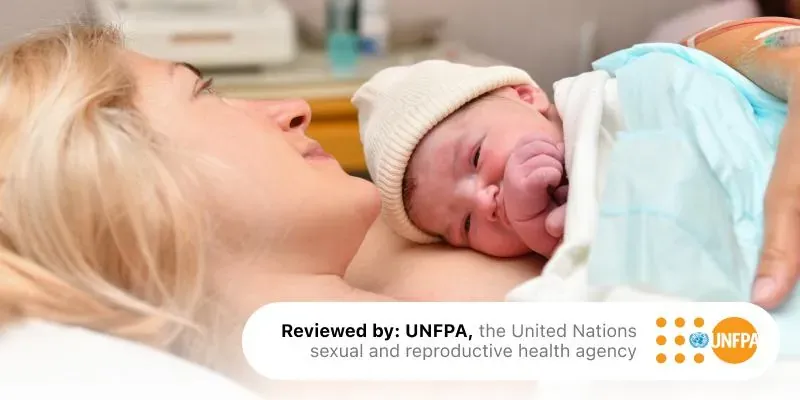
Photo: Laura Garcia / Pexels


Frequently asked questions

Babies are ready to interact with other adults from birth, but they're especially receptive during the first three months. During this period, they perk up when people look at them and respond with smiles and babbling to affectionate voices.

No, babies who interact with multiple trusted adults develop individual bonds with each person without weakening their connection to parents. This actually helps with socialization as the child grows older.

It's best to keep your baby's social circle small with no more than ten trusted adults. This provides beneficial socialization without overwhelming your baby with too many different people.

Multiple adult bonds help with your baby's social development and provide backup caregiving support. From an evolutionary perspective, babies who had contact with multiple trusted adults had better survival chances.

Choose trusted family members and close friends like fathers, grandparents, or longtime family friends. These should be people you completely trust who can provide consistent, loving interaction with your baby.

Medical Disclaimer

This article is for informational purposes only and is not a substitute for professional medical advice, diagnosis, or treatment. Always seek the advice of your physician or qualified health provider with any questions you may have regarding a medical condition.

Meet our medical experts

Medically reviewed content

Reviewed by healthcare professionals · Updated September 6, 2024

This article is based on peer-reviewed research and trusted medical sources.

  1. Infants communicate in order to be understood. Grosse G., Behne T., Carpenter M., Tomasello M. Devel

Track your pregnancy on the go

Rated 4.8417,594 reviews