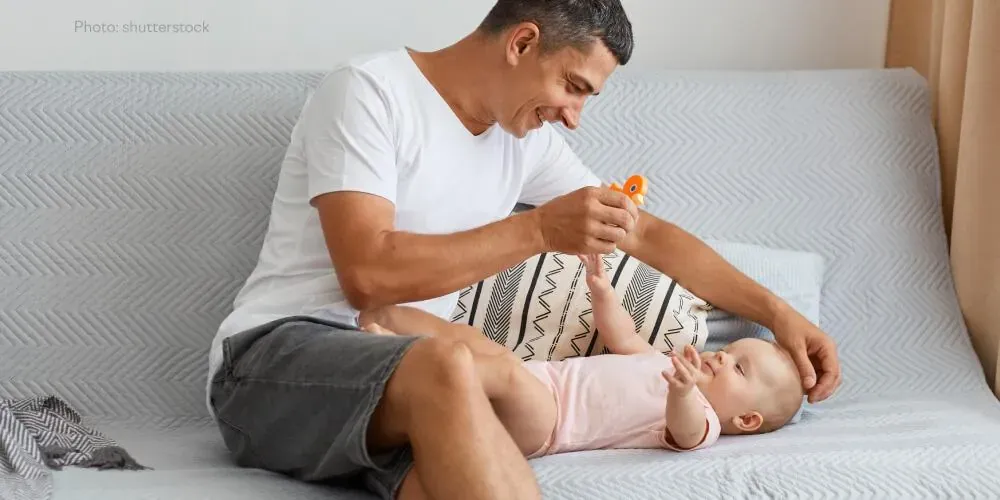

Ads often promise to make your baby a genius with early learning programs. This idea comes from books by Glenn Doman, Masaru Ibuka, and others. They argue that a baby’s brain is incredibly capable and eager to learn from birth, so the sooner you start, the better [1, 2].
Is this true?
Apparently no. There’s no evidence that learning gets harder for children after a certain age [3]. Babies can't engage in mental activities we think of as studying because their brains are still developing. Swiss psychologist Jean Piaget called the period from birth to two years a phase of sensorimotor intelligence. This means babies learn through physical activity, not by studying [4].
How can a baby learn from physical activity?
Babies discover by touching and exploring everything around them. This helps them figure out their own bodies, tell themselves apart from others, and understand how to interact with the world. It's a big job for their growing brains!
But what about young geniuses?
Yes, some very young children seem to learn math or languages, but these are rare cases. They usually learn by rote, without understanding the meaning. For example, a one-year-old might count to 10 but doesn’t grasp what numbers actually represent.
Do I need to buy baby brain games?
No. Most brain games for babies, like logic or math games, require abstract thinking, which develops later. Instead, get a play mat for new tactile experiences and fine motor skills. Or take your baby to the park to feel the grass and see the trees. These experiences are much more beneficial.
Photo: shutterstock