EN
try amma today
All you need to know about babywearing
New Parent

All you need to know about babywearing

3 min readWeek 37
Key takeaways
3 min
  • Choose between slings (fabric strips), soft carriers (padded front carriers), and backpack carriers (rigid frame for older babies) based on your baby's age and needs.
  • Ensure proper positioning with baby upright against your body, legs spread apart, airways clear, and chin not pressed to chest to prevent safety risks.
  • Consult your healthcare provider before using any carrier with newborns, especially premature babies or those with health conditions.
  • Consider a mei-tai carrier as a hybrid option that combines fabric construction with structured straps for easier use than traditional slings.
  • Check product labels for age recommendations and prioritize carriers that support healthy hip development over convenience features.

Choose baby carriers based on your child's age and development. Slings and soft carriers work from birth with proper positioning, while backpack carriers are only for older babies who can support their heads independently.

amma app

Track your pregnancy in the app

Personalized content for your pregnancy week

Download App

Slings? Backpacks? Baby carriers? How do you choose the best baby carrier when you need some hands-free time? Here are five questions and answers to help you consider your babywearing options. 

What is the difference between a sling, backpack, and baby carrier?

  • A baby carrier is a soft, padded carrier you wear on your front.

  • A sling is a strip of fabric, usually secured over your shoulder and worn across your body in various positions.

  • A backpack usually has a rigid frame. You wear backpacks only on your back, and they are suitable for older babies and toddlers who can hold up their heads [1]. 

Which one is the safest for my baby?

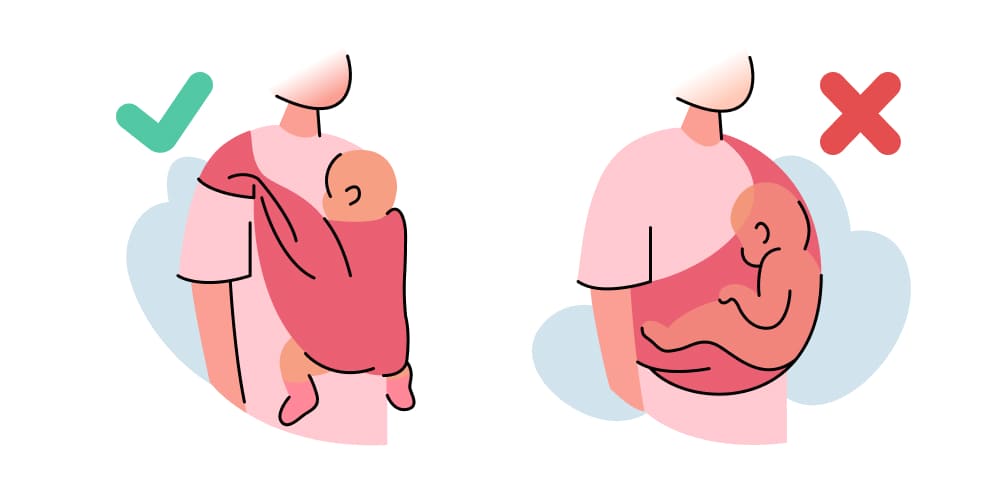
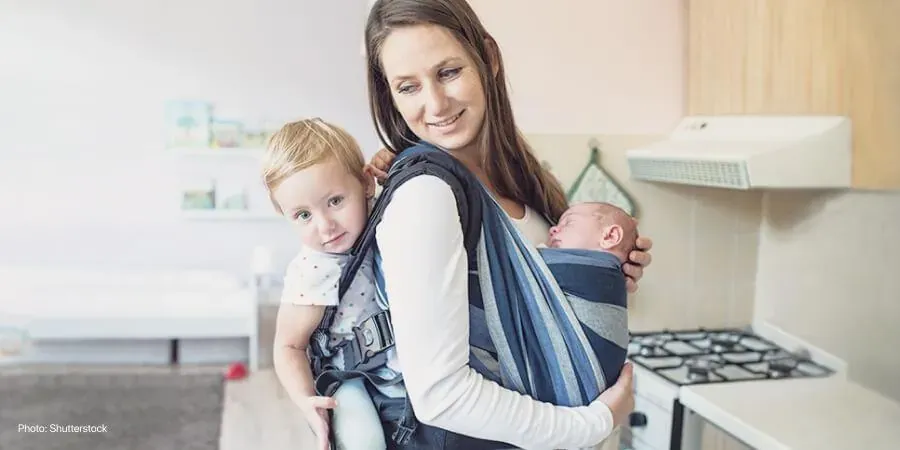
Both slings and baby carriers are suitable if the baby is sitting correctly in it, which means [1, 2]:

  • the baby is kept solidly against the parent's body in an upright position;

  • the baby's legs are spread apart;

  • the baby "hangs" on their hips and does not sit on their buttocks (the lower part of the spine shouldn’t be loaded);

  • your baby's mouth and nose don’t press against the fabric or your body, and airflow is not restricted; 

  • you can see your baby's face;

  • your baby's neck is straight, and their chin does not press into their chest;

  • the baby's body does not curl into a C-shape.
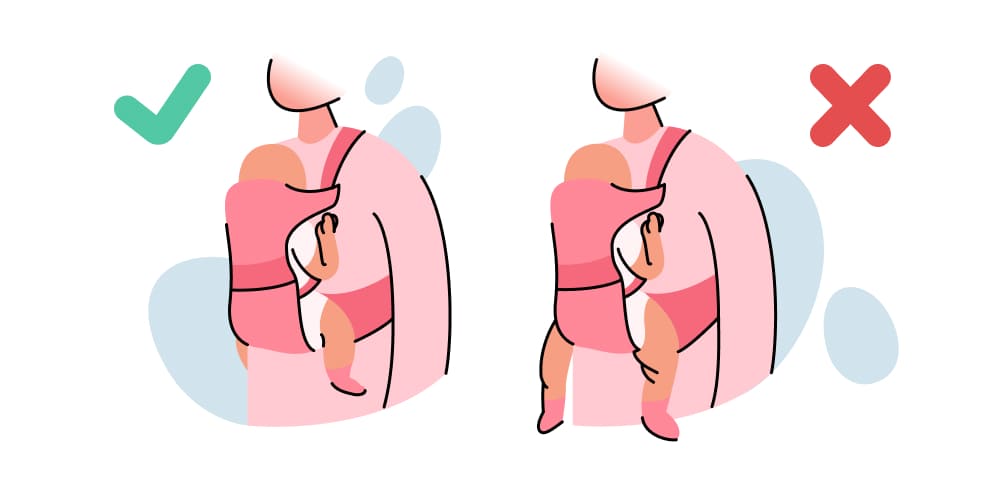
Illustration for All you need to know about babywearingIllustration for All you need to know about babywearing

What happens if I carry my baby incorrectly?

It can cause problems such as blocking of the respiratory tract, which can lead to suffocation [3, 4]. Furthermore, if the baby is constantly seated incorrectly, it can interfere with hip joint development [5]. 

From what age can a sling and baby carrier be used?

Ask your healthcare provider before using a sling or backpack for a newborn, especially if the baby was born prematurely or has any health problems [2]. Most slings and baby carriers can be used from birth, but check the label on the product. Backpack-type carriers are only suitable for toddlers [1]. 

What is more convenient — a sling or a baby carrier?

Both have their pros and cons.

Sling

+ takes up little space;
+ can be used as a blanket or cover when needed;
+ evenly distributes weight on the back and has no straps that can dig into the skin.

– it takes a long time to put it on;
– may stretch over time and become unsafe.

Baby carrier

+ easy and quick to put on;
+ convenient for both parents to use.

– may not provide healthy hip positioning (carefully choose a safe model);
– takes up a lot of space.

You can also consider an option halfway between a sling and a backpack, called a mei-tai carrier. It is made entirely of fabric but has some structure and straps, so you can put it on faster than a regular sling.

Frequently asked questions

A sling is a strip of fabric worn across your body in various positions, while a baby carrier is a soft, padded carrier worn on your front. Slings take longer to put on but are more compact, while carriers are quicker to use but bulkier.

Most slings and baby carriers can be used from birth, but always check the product label and consult your healthcare provider first. This is especially important for premature babies or those with health conditions.

Incorrect positioning can block your baby's respiratory tract leading to suffocation risks. It can also interfere with healthy hip joint development if the baby is consistently seated improperly.

No, backpack carriers with rigid frames are only suitable for older babies and toddlers who can hold up their heads independently. Always use soft carriers or slings for younger babies.

Your baby should be upright against your body with legs spread apart, airways clear, and you should be able to see their face. Their chin shouldn't press into their chest and their body shouldn't curl into a C-shape.

Medical Disclaimer

This article is for informational purposes only and is not a substitute for professional medical advice, diagnosis, or treatment. Always seek the advice of your physician or qualified health provider with any questions you may have regarding a medical condition.

Meet our medical experts

Medically reviewed content

Reviewed by healthcare professionals · Updated September 6, 2024

Track your pregnancy on the go

Rated 4.8417,594 reviews