That moment when you spot brown discharge on your underwear during pregnancy — your heart probably skips a beat. Is this normal? Should I call my doctor right now? You're definitely not alone in this worry. Bleeding in the first trimester is common: according to the American College of Obstetricians and Gynecologists (ACOG), it happens in 15 to 25 in 100 pregnancies.
Here's what many moms don't realize: brown discharge is often just old blood that's taken its sweet time making its way out of your body. When blood sits around for a while, it oxidizes and turns that rusty brown color — kind of like how a cut on your finger turns brown as it heals.
Why Brown Discharge Happens During Pregnancy
Your cervix becomes a bit of a drama queen during pregnancy. Increased blood flow and hormonal changes make it more sensitive than usual, which means it can bleed more easily from things that wouldn't have bothered you before. According to ACOG, the cervix may bleed more easily during pregnancy because more blood vessels are developing there.
But here's where it gets interesting — the timing and characteristics of brown discharge can tell you a lot about what's going on. Sometimes it's your body's way of clearing out old menstrual blood (yes, even though you're pregnant). Other times, it might signal something that needs medical attention.
First Trimester: The Most Common Culprits
During those early weeks, brown discharge often shows up for pretty innocent reasons. One is implantation bleeding, which can occur 1 to 2 weeks after fertilization. This light spotting happens when your little embryo burrows into the uterine lining — and yes, it can appear brown if it takes a day or two to make its exit.
Many moms tell us they first noticed brown discharge right around when their period would have been due. That's actually your body's way of saying "we're closed for business" to your normal menstrual cycle. The hormonal shift can cause a small amount of breakthrough bleeding that appears brown by the time you see it.
Your cervix is also going through major renovations right now. The increased blood supply can make it bleed after sex, a pelvic exam, or even a vigorous workout. According to ACOG, it's not uncommon to have spotting or light bleeding after sex or a pelvic exam.
When First Trimester Brown Discharge Needs Attention
Not all brown discharge gets a free pass, though. Brown discharge is a form of bleeding, so call your healthcare provider about it right away, even if it's light and you don't have cramps: it can be a sign of a miscarriage or an ectopic pregnancy. Cramping that feels like menstrual cramps or worse, especially if it's getting stronger, makes that call more urgent.
In the UK, around 1 in every 90 pregnancies is ectopic, according to the NHS. The brown discharge in these cases often comes with one-sided pelvic pain and can be a medical emergency.
Second and Third Trimester Considerations
Once you hit the second trimester, brown discharge becomes less common, and according to ACOG, bleeding later in pregnancy can be more serious. Your cervix is still sensitive, so you might notice some brown spotting after your routine prenatal appointments — especially after those cervical checks later in pregnancy.
Around 37-42 weeks, some women notice brown or pink discharge mixed with mucus. This could be your mucus plug starting to come away as your cervix begins to soften and thin out. According to the NHS, these small "shows" can come in the days before labor starts, so labor may still be a few days away. If you're losing more than a little blood, or this happens before 37 weeks, call your doctor or maternity unit right away.
However, any bleeding in the second or third trimester deserves a call right away: ACOG advises that if you have any bleeding late in pregnancy, you contact your ob-gyn right away or go to the hospital. Placental abruption, though rare (occurring in only 0.4-1% of pregnancies), can initially present as brown discharge before progressing to heavier bleeding.
After Sex and Medical Exams: Why Your Cervix Protests
Here's something your doctor might not have mentioned: pregnancy makes your cervix about as delicate as tissue paper. All those extra blood vessels mean even gentle contact can cause light bleeding that shows up as brown discharge later.
Many women notice brown spotting after their partner hits their cervix during sex — something that might not have bothered them before pregnancy. This post-coital bleeding is often harmless, but call your healthcare provider about it anyway: any bleeding in pregnancy should be checked.
Similarly, those routine pelvic exams and Pap smears can leave you with brown discharge for a day or two afterward. The speculum and swabs can irritate your sensitive cervical tissue, causing minor bleeding that appears brown by the time gravity does its work.
Red Flags: When to Call Your Doctor Immediately
Call your healthcare provider right away about any brown discharge in pregnancy, especially if you experience:
- Brown discharge accompanied by severe cramping or abdominal pain
- Discharge that progresses from brown to bright red bleeding
- Any discharge with a foul smell or unusual texture
- Brown discharge with fever, chills, or signs of infection
- Heavy bleeding, or bleeding with feeling faint or dizzy (call your local emergency number)
Trust your instincts here. Many moms tell us they "just knew" something wasn't right, even when their symptoms seemed mild. Your body often knows before your brain catches up.
Documentation: Your Secret Weapon
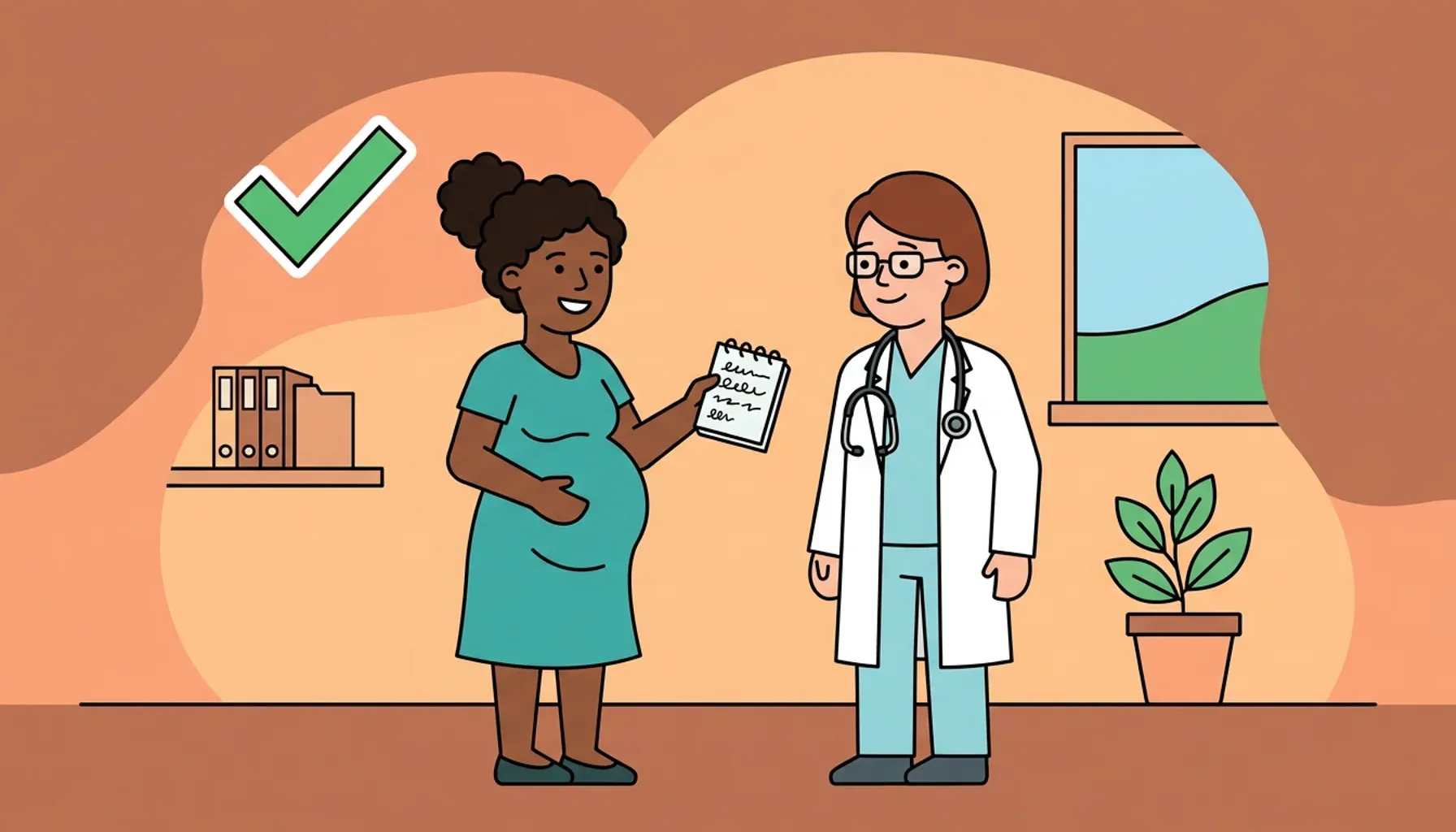
Here's a practical tip that can save you stress later: keep a simple log of any discharge or bleeding. Note the date, amount, color, and any accompanying symptoms. This information is gold to your healthcare provider and can help them determine whether what you're experiencing is within the normal range.
Most brown discharge during pregnancy turns out to have a harmless cause, but only your doctor or midwife can tell, so always call them about it. Your body is working incredibly hard to grow a human, and sometimes that process involves a little extra housekeeping in the form of old blood making its way out. But when in doubt, there's absolutely no shame in calling your doctor — that's what they're there for, and they'd much rather hear from you about something that turns out to be normal than miss something important.